

We turn data into information, and information into insight, with engineering that spans mobile, web, security, and AI.


Innovation and change define the mobile landscape, and Apple's iOS is at the forefront. Our iOS team embraces that change, and as the ecosystem has grown we have adopted every new feature and technology. We understand how the iPhone, iPad, Apple Watch, and Apple TV work together, and how to leverage each of their strengths to create solutions spanning all of Apple's mobile platforms. Our iOS developers stay ahead of emerging trends in software development and architecture, working closely with clients to build apps their audiences love to use and keep coming back to. Our commitment to quality means we reuse as much proven work as possible. For that reason, we maintain:


Android development is built on Java, which is both a strength and a challenge for companies looking to create an app. Java is one of the most popular languages and is often the first taught to developers, which means a large pool of engineers all claim proficiency in it. That volume makes it hard to tell a merely competent developer from a truly great Android engineer. The subtler point, and one most companies miss, is that the ability to write Java applications often translates poorly to writing high-quality Android apps, for example:


Why is mobile security important? Exploits and breaches make national news regularly and carry serious consequences for the companies involved. Industry studies put the average cost of a data breach in the millions of dollars. The security of your app should be critical to whoever your mobile partner is. Our mobile developers have worked on projects where any security compromise, small or large, could result in significant loss of revenue, and in some cases put people at risk. Getting your app's security right from the start is our priority, on every project, for every client.
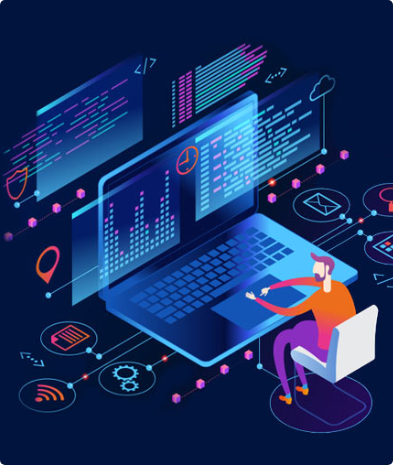

The modern web is far more than static pages and content. It is the most open, flexible, and immediately accessible application runtime available today, on both mobile and desktop browsers. Modern web applications use architectures that make them feel more like native iOS and Android apps than the web of old. Business logic, once confined to the server, now lives primarily in the browser. This shift results in:
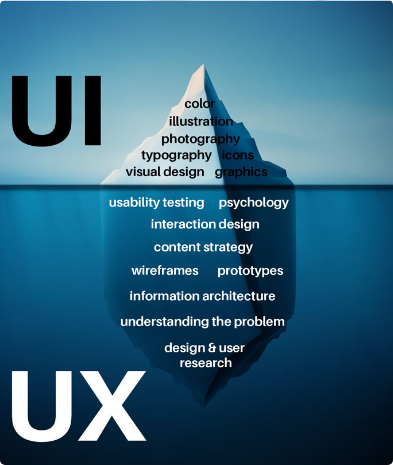

We take a holistic approach to UX design. NY Marvels designers work directly alongside our UX strategists, developers, and your team to iterate through new ideas and designs quickly. On any given day you might find them in the field doing ride-alongs with client sales teams, interviewing customers in stores or restaurants, or walking factory floors to design more efficient systems. We immerse ourselves in our clients' business and take a roll-up-our-sleeves approach to design, working hand in hand with internal and client development teams so that what we design is cost-effective to build. The result: designs that are beautiful, feasible to engineer, and easy to deploy.
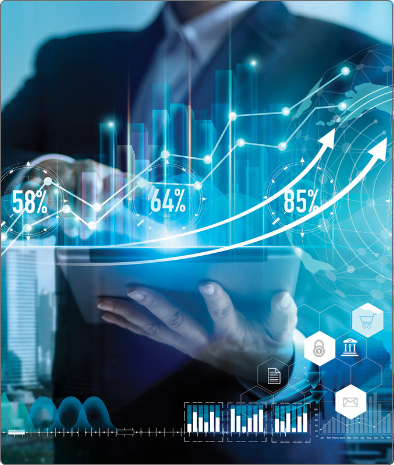

Data analytics turns raw business data into actionable insight. NY Marvels helps companies make quick, data-driven decisions in fast-changing markets by delivering a full set of data analytics services.
In a reasonable timeframe, we help you replace fragmented, inaccurate reporting with data analytics best practices that improve both the quality and the speed of your decisions.


Application security describes the measures taken at the application level to prevent data or code within an app from being stolen or hijacked. It spans the security decisions made during development and design, as well as the systems and practices that protect apps after they are deployed. Application security can include hardware, software, and procedures that identify or minimize vulnerabilities. A router that hides a computer's IP address from the internet is a form of hardware application security, while an application firewall that strictly defines what is allowed and prohibited is built into the software. Procedures such as a routine of regular testing round out a mature application security program.
Leverage our machine learning, data science, and artificial intelligence expertise to drive better business outcomes: minimizing downtime, identifying outliers, and forecasting what comes next. Our ML experts and AI consultants guide you through every stage of development to create bespoke solutions that deliver tangible results. Our AI consulting is human-centered, outcomes-oriented, and pragmatic, built to make you the leader in your field and unlock more value from your data.
A set of best practices for Apple and open-source frameworks and libraries. This lets us not only select the right tool for the job, but also use it in the most efficient way possible.
A set of internal and open-source helper libraries and frameworks, including helpers for functional programming, layout, database, and other common tasks. These let us skip the boilerplate and focus on adding real value to your project.
A set of high-quality, high-performance, reusable UI controls that follow Apple's Human Interface Guidelines and integrate seamlessly into any iOS app, so every app we ship features an excellent user experience without being rebuilt from scratch.
Common Java application architecture has no place in the Android framework. Android apps have to be fast, 60fps fast. Delivering that performance across billions of Android devices requires deep attention to detail and serious QA resources.
Android apps have to be memory efficient. Many devices allocate only a small footprint per app. Ask the average Java developer their last app's memory footprint and they often will not know, or it will be far above what an Android device allows.
Android apps must be able to close and reopen at any time and from any point in the app. Architecting for that is not part of a traditional Java developer's day-to-day, and it is not a skill you pick up overnight.
We pride ourselves on delivering apps that are both high quality and secure, with the flexibility to support each client's unique security needs. Your company and your product both have distinct requirements, and we align them from day one.
We map your organization's priorities to the level of security your product actually requires, so you invest in the protection that matters rather than a one-size-fits-all checklist.
Security is designed in from the first architecture decision, not bolted on before launch, covering data at rest, data in transit, authentication, and safe handling of sensitive information.
The tools available to build rich web applications have matured dramatically. Our team has deep experience across modern JavaScript frameworks, choosing the right one whenever its particular strengths fit the project at hand.
We have shipped everything from high-profile media streaming applications to sophisticated HTML5 experiences, with architectures that keep interfaces fast and responsive on any device.
Progressive web app techniques, offline support, and component-driven design let us deliver web products that feel native while staying instantly accessible in the browser.
We continuously review the design tool and resource marketplace so our team has access to industry-leading toolsets that our clients can then leverage.
The UX lead on each project works closely with your team to select a toolset and set up a design process that fits your organization, not a rigid template.
Research, wireframes, prototypes, and usability testing keep every decision grounded in how real users behave, so the final product is intuitive from the first tap.
NY Marvels is ready to calculate your ROI so you can eliminate the guesswork in valuing your data analytics project.
Our experts will run a situation analysis and prepare a tailored data analytics solution aligned with your current business needs.
Application security features include authentication, authorization, encryption, logging, and application security testing. Developers can also write code specifically to reduce security vulnerabilities.

Procedures built into an application to ensure only authorized users gain access, confirming that a user is who they claim to be. This can require a user name and password at login. Multi-factor authentication adds more than one factor: something you know (a password), something you have (a mobile device), and something you are (a fingerprint or facial recognition).

Once authenticated, a user may be authorized to access and use the application. The system validates permission by comparing the user's identity against a list of authorized users. Authentication must happen before authorization, so the application only matches validated credentials against that list.

Once a user is authenticated and active, further measures protect sensitive data from being seen or used by an attacker. In cloud-based applications, traffic carrying sensitive data between the user and the cloud can be encrypted to keep it safe.
If a breach occurs, logging helps identify who accessed the data and how. Application log files provide a time-stamped record of which parts of the application were accessed, and by whom.
A necessary process to confirm that all of these security controls actually work as intended.
Application security matters because today's applications are often available across many networks and connected to the cloud, which increases exposure to threats and breaches. There is growing pressure to ensure security not only at the network level but within the applications themselves, in part because attackers increasingly target apps directly. Application security testing reveals weaknesses at the application level and helps prevent those attacks.

Cloud environments add extra challenges, because resources are shared. Special care is needed to ensure users only access the data they are authorized to see in cloud-based applications. Sensitive data is also more exposed in the cloud, since it travels across the internet between the user and the application and back.
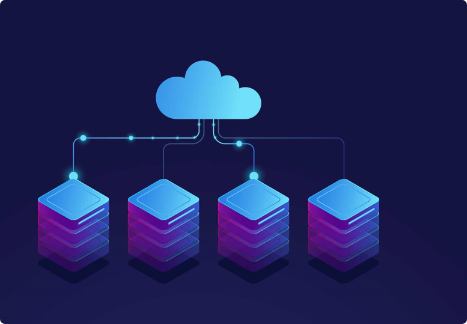
Mobile devices transmit and receive information across the internet rather than a private network, which makes them vulnerable to attack. Enterprises can use virtual private networks (VPNs) to add a layer of mobile application security for employees who log in remotely. IT teams may also vet mobile apps and confirm they meet company security policies before allowing them on devices that connect to the corporate network.
Web application security applies to the apps and services users reach through a browser over the internet. Because web applications live on remote servers rather than the user's machine, information must travel to and from the user across the internet. This is a special concern for businesses that host web applications or provide web services, which is why many protect their network with a web application firewall that inspects and, where necessary, blocks harmful data packets.
Application security controls are techniques that harden an application at the code level, making it less vulnerable to threats. Many deal with how the application responds to unexpected inputs an attacker might use to exploit a weakness. Developers can write code that gives them more control over the outcome of those unexpected inputs. Fuzzing, for example, is a form of application security testing where developers feed unexpected values or inputs to discover which ones make the application behave in a way that could open a security hole.

Developers perform application security testing as part of the software development process to ensure a new or updated release has no security vulnerabilities. A security audit confirms the application meets a specific set of security criteria. After it passes, developers make sure only authorized users can access it. In penetration testing, a developer thinks like an attacker and looks for ways to break in, which may include social engineering or attempts to trick users into granting unauthorized access. Testers commonly run both unauthenticated and authenticated scans to surface vulnerabilities that might not appear in either state alone.
From strategy and model design to data engineering and deployment, we take your idea from a working proof of concept to a production-ready system built for full scale.
We build predictive and generative models across IoT, analytics, and digital transformation, focused on measurable outcomes: reduced downtime, earlier anomaly detection, and reliable forecasting.
Our approach is responsible by design. We prioritize data quality, explainability, and provenance, so the systems we deliver are ones your teams and your customers can actually trust.
NY Marvels was founded by Dinesh Mendhe, who today also serves as Founder and Chairman of The AI Lab Intelligence Unobscured, Inc. and is the inventor of the Trust Identity Protocol (TIP), the open, post-quantum standard for verified human identity and AI content provenance on the internet.
That frontier research shapes how our teams approach machine learning and AI: with trust, provenance, and responsible deployment at the center, not just accuracy. When you build AI with NY Marvels, you benefit from a team fluent in both enterprise delivery and the standards defining the next era of trustworthy AI. Learn more at theailab.org.